Home-Built Broadband Detector Based on the AD8362
In radio astronomy there are two fundamentally different approaches to signal processing: analogue and digital. Both have their advantages and disadvantages — particularly for amateur radio astronomers working with limited resources. Digital Signal Processing (DSP) is based on converting analogue input signals into digital data that is then analysed by a processor. This approach is flexible, powerful, and offers many possibilities for post-processing. Software Defined Radios (SDRs) are typical representatives of this class and are growing in popularity compared to analogue processing. While SDRs offer many advantages — high precision, adaptability, and a broad software ecosystem — they have one critical drawback: limited bandwidth. Inexpensive SDRs often process only a few megahertz at a time. Anyone wanting a wider bandwidth must invest considerably in high-end hardware, plus a powerful PC capable of handling the required computations.
This is where simple broadband receivers — such as logarithmic or true-power detectors — come into their own. Their strength is a large usable bandwidth, often several hundred megahertz.
The radiometer equation states that the sensitivity of a radio telescope depends on three factors: system noise temperature, receiver bandwidth, and integration time. For amateur astronomers with small antennas, bandwidth is often the only lever available to increase sensitivity when system noise cannot be further reduced. Greater sensitivity is essential for detecting faint continuum sources such as supernova remnants. By way of comparison: the flux density of the supernova remnant Taurus A in the Ku-band is roughly 100 times lower than that of the Moon, and the Moon’s flux density is again about 100 times lower than the Sun’s. The challenge is enormous — but not impossible.
Two factors work in the amateur radio astronomer’s favour: for the Ku-band, in which TV satellites broadcast, antennas and LNBs can be obtained very cheaply — satellite dishes with LNBs are sometimes given away free online. Modern LNBs in the 11 GHz range also achieve very low noise figures, enabling high sensitivity. Secondly, supernova remnants have a flatter spectral index, meaning their flux density does not fall off as quickly with increasing frequency. With the exception of the Sun and solar system objects, all continuum sources are in principle better observed at lower frequencies (for example in the L-band at 1420 MHz). However, the supernova remnant Taurus A (Crab Nebula, M1) remains detectable even at 11 GHz.
The Design: AD8362 + ADS1115 + Arduino
To develop the most sensitive possible broadband detector for our radio telescope, we tested various approaches, including logarithmic detectors, true-power detectors, and simple diode detectors. Many of these components are now available cheaply as ready-made plug-in modules online.
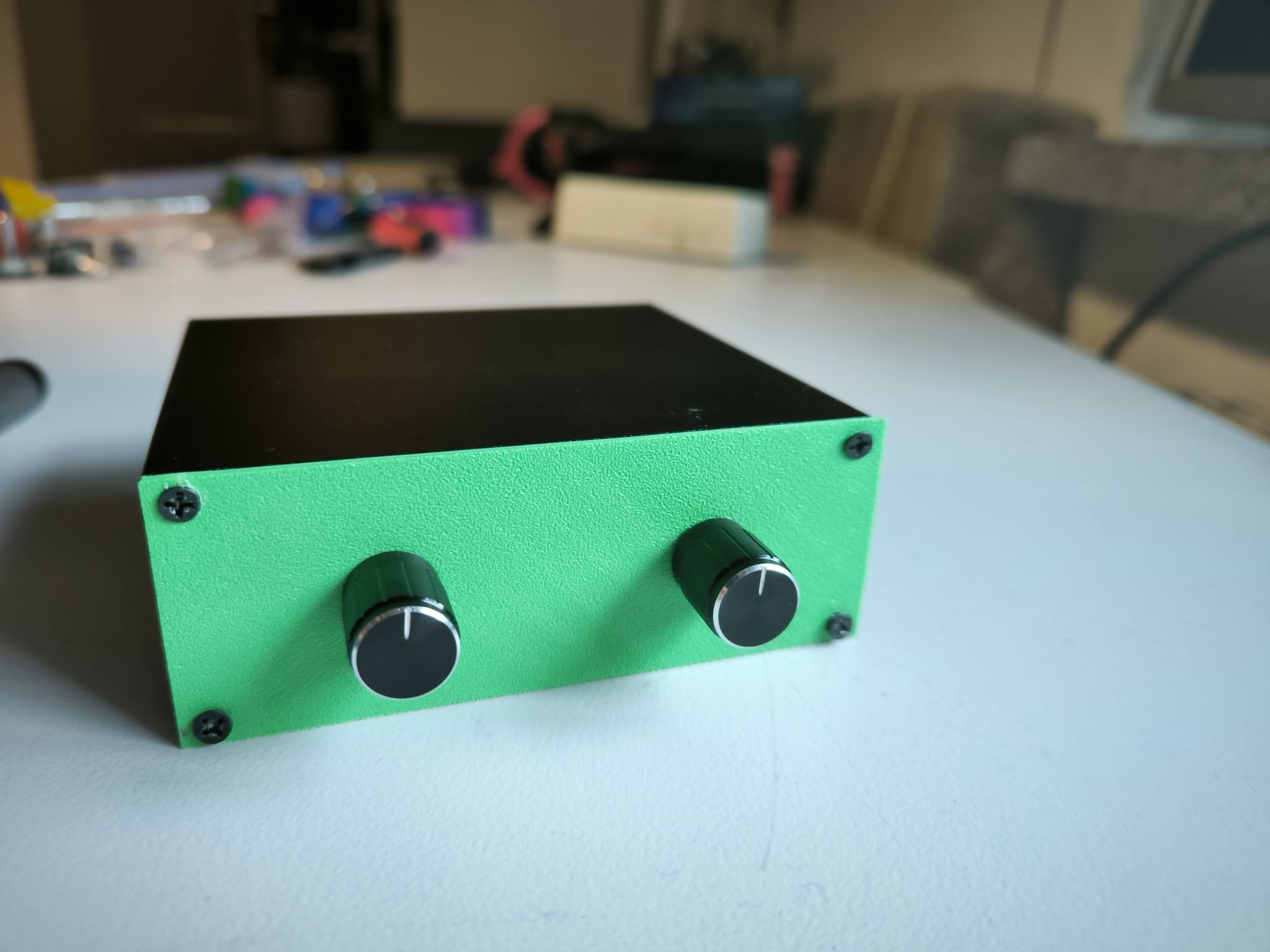
The best results among the detector boards we tested were achieved with the AD8362. Unlike logarithmic detectors such as the AD8317, which scale the output signal logarithmically and invert it in the process, the AD8362 delivers a linearly scaled, non-inverted signal. It also features an integrated amplifier and can reliably measure input signals in the range of −55 dBm to +5 dBm.
Interestingly, our tests showed that simple diode detectors can in some cases yield even better results — particularly due to their very low self-noise. However, they require external amplification, as they have none of their own. A preceding LNA and a following op-amp are therefore necessary. We also experimented with circuits performing analogue signal processing. Low-pass filters can integrate signals to reduce noise; subtraction and amplifier circuits using op-amps enable offset correction and signal amplification, which increased the resolution and sensitivity of the receiver. For the initial test series, however, we opted for the AD8362 and largely dispensed with analogue signal processing. Integration, offset, and amplification can also be implemented in software via digital signal processing.
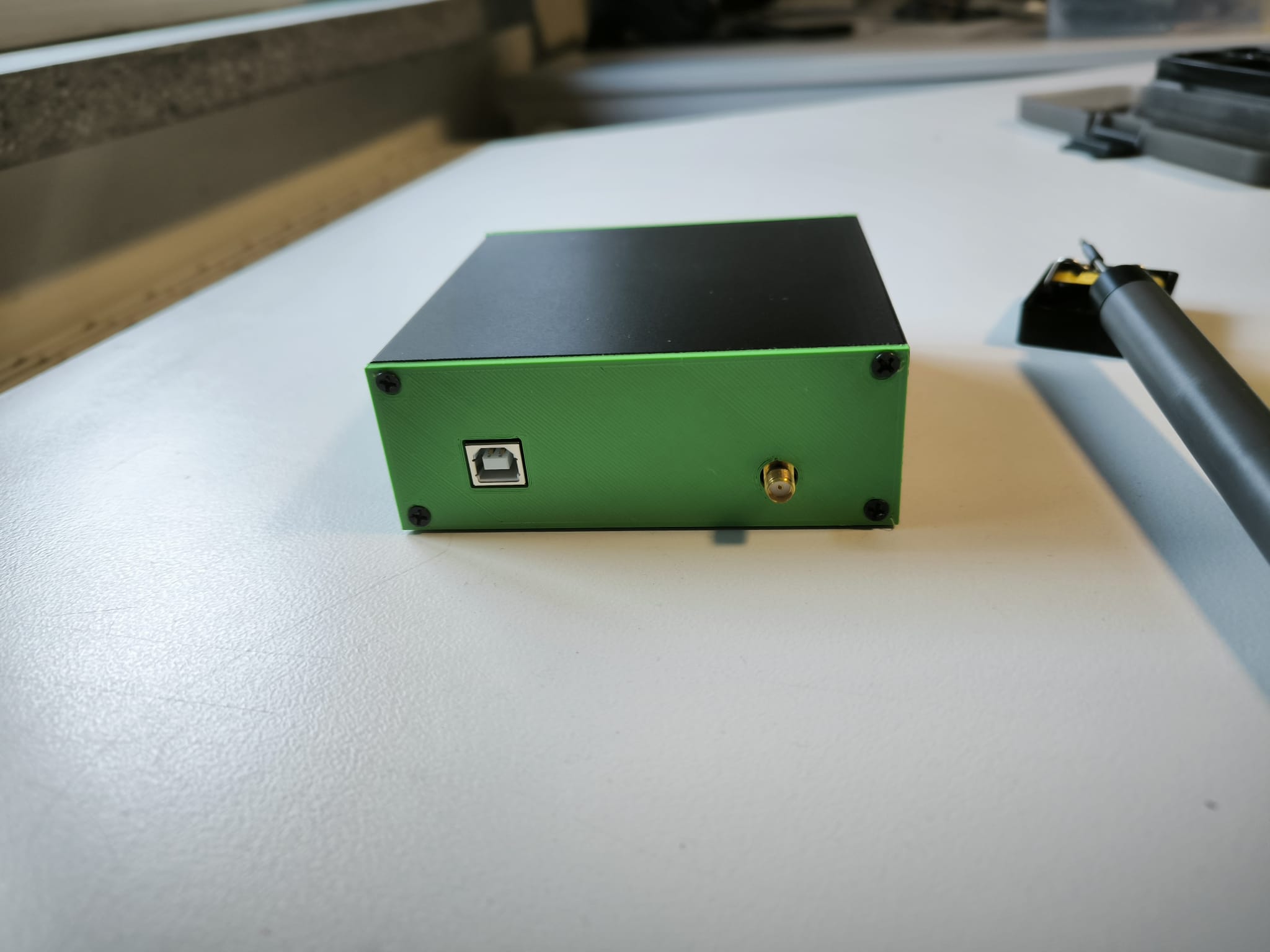
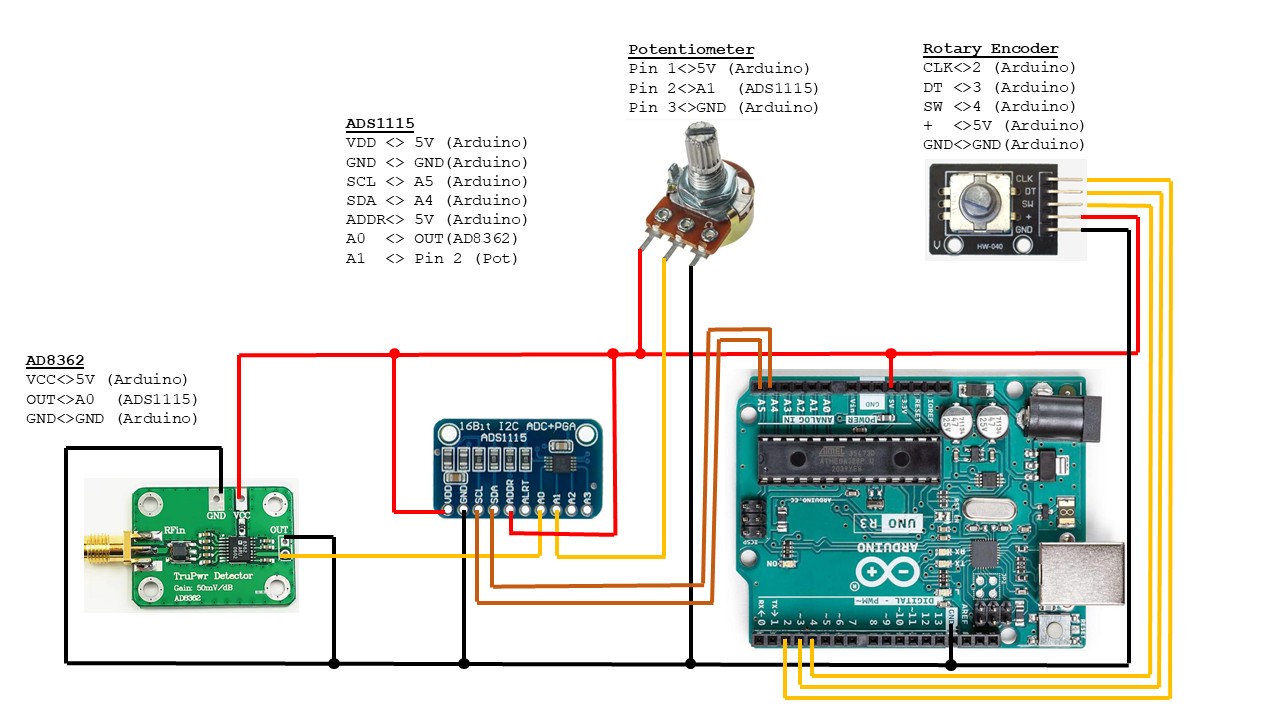
Thanks to its integrated amplification, the AD8362 allows a very simple and compact design. This not only reduces susceptibility to interference but also the likelihood of failures — an important advantage for sensitive measurements in radio astronomy. The output signal from the AD8362 is fed directly into a 16-bit ADC (ADS1115) and then sent via an Arduino microcontroller to a PC for digital analysis. Total cost is only around €30.
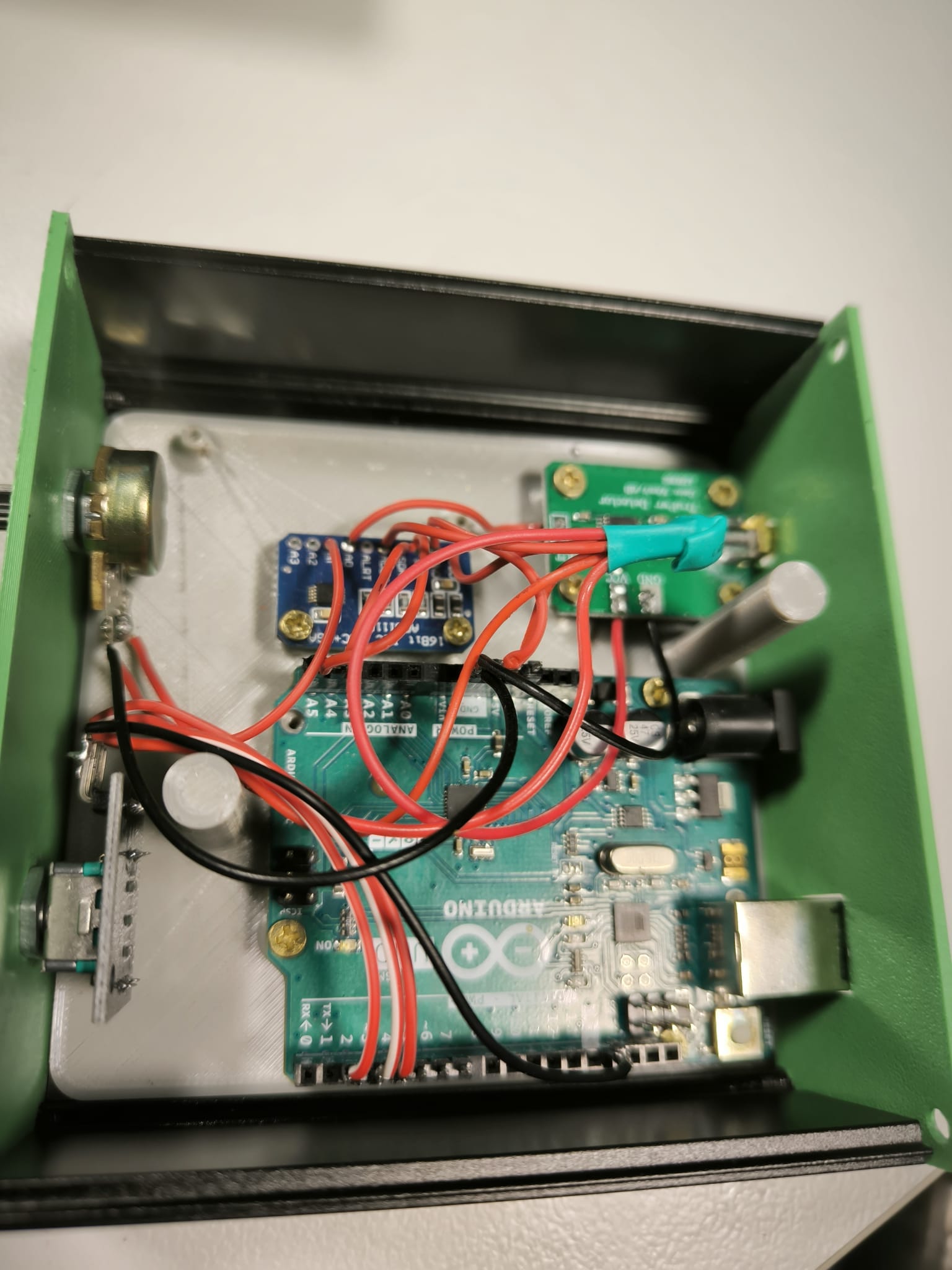
The signals are first sampled by the ADS1115; its differential ADC function allows an offset to be set, and the resolution can be controlled via an adjustable sampling range. The samples are then integrated in the Arduino.
The detailed technical background and the software will be covered in a follow-up article. The result is a highly sensitive detector at low cost. The results are promising. In a test run, the transit of the Moon was recorded — the signal curve, produced with Radio Sky Pipe, is clear and low in noise.
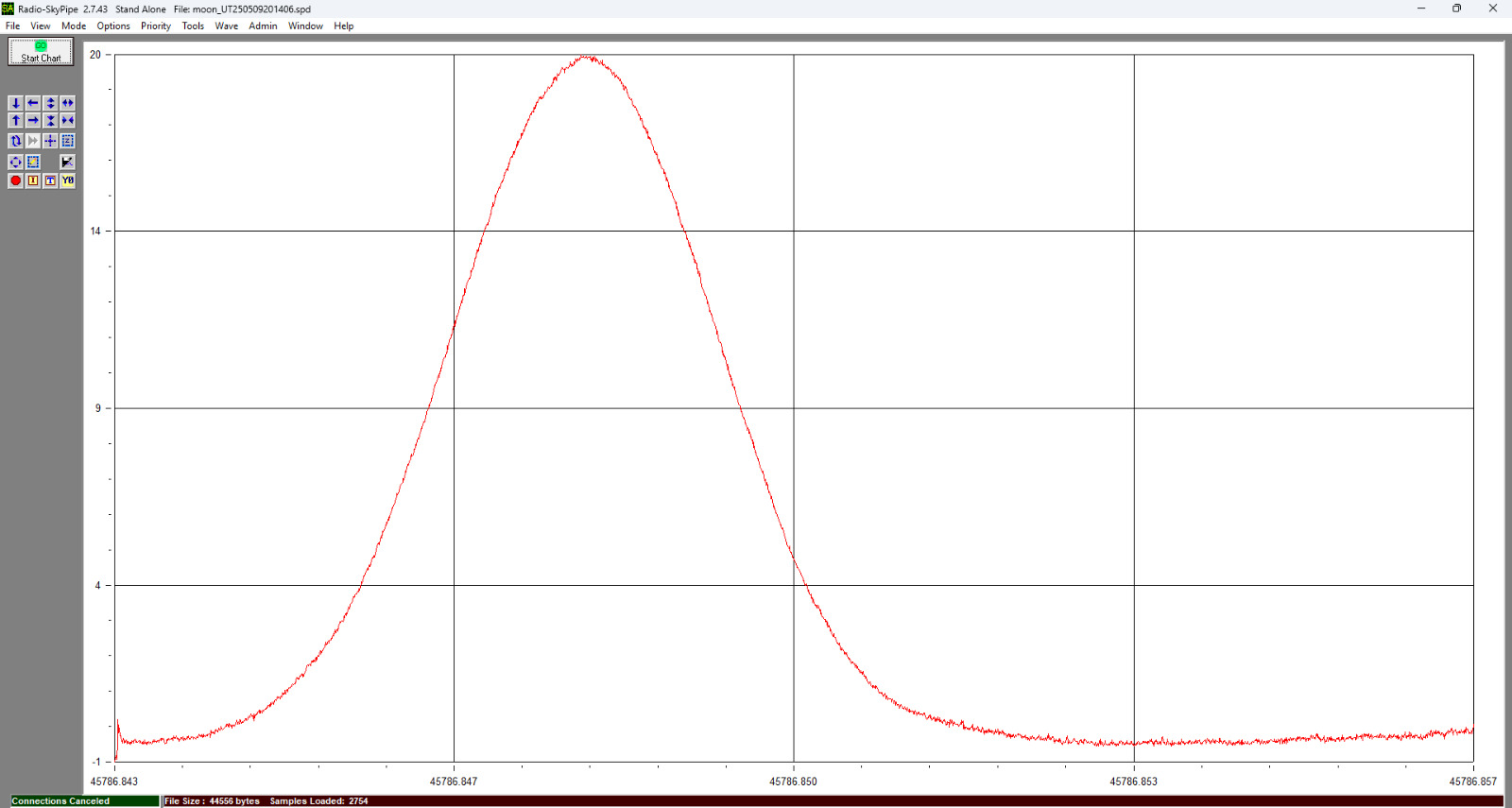
This gives hope that even fainter sources such as Taurus A will be detectable with this setup in the future. The broadband detector based on the AD8362 presented here demonstrates that high sensitivity can be achieved with simple means — ideal for anyone wishing to track down faint cosmic radio signals with a small antenna.